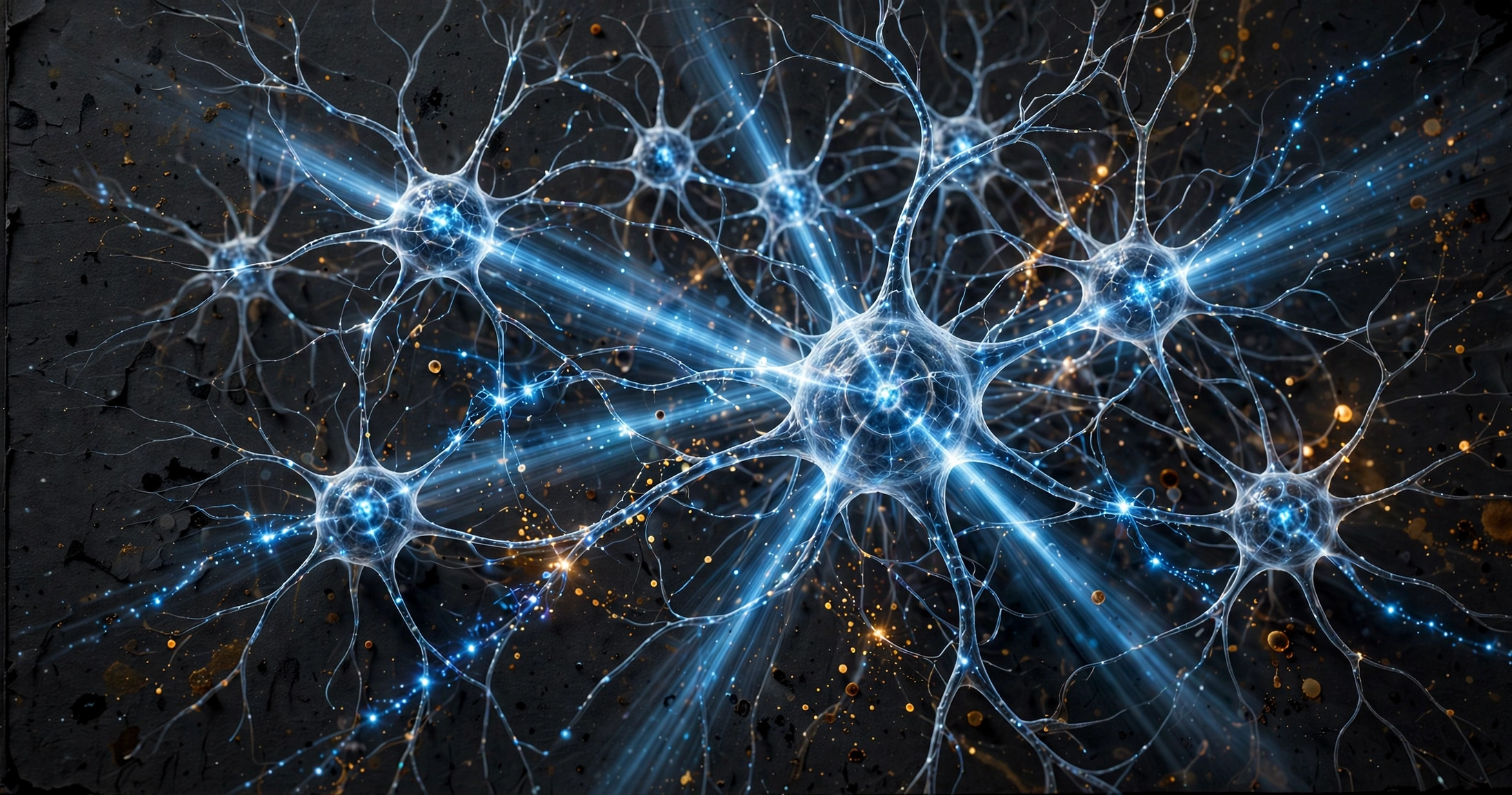
The Nobel Prize 2026 optogenetics award goes to Karl Deisseroth, Peter Hegemann and Georg Nagel for “discoveries concerning light-gated ion channels and optogenetics.” Announced today at Karolinska Institutet in Stockholm, the award honours a technique that lets scientists switch individual brain cells on or off using light. The Nobel committee called it the foundation of a new era in neuroscience.
As a physician-researcher working with mental health data, I read this year’s announcement with real interest. Here is what the prize rewards, and why it matters.
What optogenetics is
Optogenetics works like a remote control for the brain, except the remote uses light. The story starts with a question about algae. In the early 1990s, Peter Hegemann asked how the single-celled alga Chlamydomonas reacts to light so quickly. Together with Georg Nagel, he discovered the answer in the early 2000s: a light-sensitive protein called channelrhodopsin that acts as a switch. When blue light hits it, a channel opens, charged ions flow in, and an electrical signal fires.
In 2005, Karl Deisseroth at Stanford introduced the channelrhodopsin gene into rat nerve cells and showed that a blue light pulse could trigger a nerve signal on command. Two years later he demonstrated it in living mice brains. Put the gene into a neuron, shine light through a fibre-optic cable, and you can turn that specific cell on or off while the animal is behaving: genetic delivery of light-sensitive switches, then light pulses with millisecond precision.
Why the Nobel committee chose it
Prizes sometimes reward a single elegant result. This one rewards a tool. “This method is now being used in laboratories around the world to reveal the brain’s mysteries,” the committee said in its statement. Committee member Anna Wedell described optogenetics as a “light-sensitive switch” that lets scientists “map which cells are responsible for which function” in the brain. Committee secretary general Thomas Perlmann put it plainly: “It’s a really new era in neuroscience thanks to this methodology.”
Before optogenetics, neuroscientists could record brain activity or damage parts of it, but could not control specific neurons in a living, behaving brain with precision. Now they can activate or silence defined circuits and watch memory, emotion and behaviour change in real time. That causal control is precisely why the Nobel Prize 2026 optogenetics decision honours a tool rather than a single result.
What it means for medicine and psychiatry
The Nobel announcement singles out circuits governing “specific memories, feelings, and behaviors relevant for neurological and psychiatric disorders.” For mental health, that phrasing matters: depression, PTSD and addiction are increasingly understood as circuit disorders, where the problem lies in how networks talk to each other rather than simple chemical imbalances.
Optogenetics has already mapped the cell populations that drive fear memories, reward seeking and anhedonia in animal models. None of this translates directly to the clinic; you cannot insert genes into a human brain and shine light on it. But those circuit maps tell researchers exactly which pathways deserve to become drug targets or stimulation targets. Deep brain stimulation for treatment-resistant depression and the new generation of psychedelic research both lean on the circuit-level knowledge this technique created.
The technique has also reached beyond the brain. The Nobel committee notes insights into how the nervous system interacts with cells in the heart and gut, which is worth watching given the growing research on the gut-brain axis.
What the prize signals about how science works
Three things stand out. First, the long timeline: Hegemann’s question about algae goes back to the early 1990s, and method prizes take this long because impact is measured by what thousands of other labs do with the tool. Second, the origin was pure curiosity; nobody funded algae light-sensing to cure depression. Third, it was a collaboration across disciplines and countries: biophysics in Germany meeting neuroscience and medicine at Stanford.
On this site I have covered the NIH’s tool for fixing science’s replication problem and how AI is reshaping clinical trials. The optogenetics story is the positive case study: a method that worked, spread, replicated everywhere and kept delivering.
Nobel Prize 2026 optogenetics: questions and answers
Who won the 2026 Nobel Prize in Physiology or Medicine?
Karl Deisseroth (Stanford University and the Howard Hughes Medical Institute, USA), Peter Hegemann (Humboldt University of Berlin, Germany) and Georg Nagel (University of Würzburg, Germany), “for their discoveries concerning light-gated ion channels and optogenetics.” The prize sum is 12 million Swedish kronor (about $1.2 million), shared among the three.
What is optogenetics in simple terms?
It is a technique for controlling brain cells with light. Scientists add a gene for a light-sensitive protein (channelrhodopsin) to specific neurons, then use light pulses to switch those neurons on or off while an animal behaves. This lets researchers prove which brain circuits cause which behaviours, memories and feelings.
Will optogenetics lead to new treatments for depression or Parkinson’s?
Indirectly, and it is already happening. Optogenetics is a research tool, not a therapy, since it needs genetic modification. Its value lies in precise maps of disease-related circuits, which guide drug development and stimulation targets that work in humans.
How long did the discovery take to be recognised?
Hegemann’s curiosity about the alga Chlamydomonas began in the early 1990s. Hegemann and Nagel identified channelrhodopsin in the early 2000s, Deisseroth adapted it for neurons in 2005 and living brains in 2007, and the Nobel came in 2026. The committee waited until the method had transformed neuroscience worldwide.
“It’s a really new era in neuroscience thanks to this methodology.” – Thomas Perlmann, secretary general of the Nobel committee, 5 October 2026
Sources: the official Nobel Prize press release and Reuters coverage of the announcement.