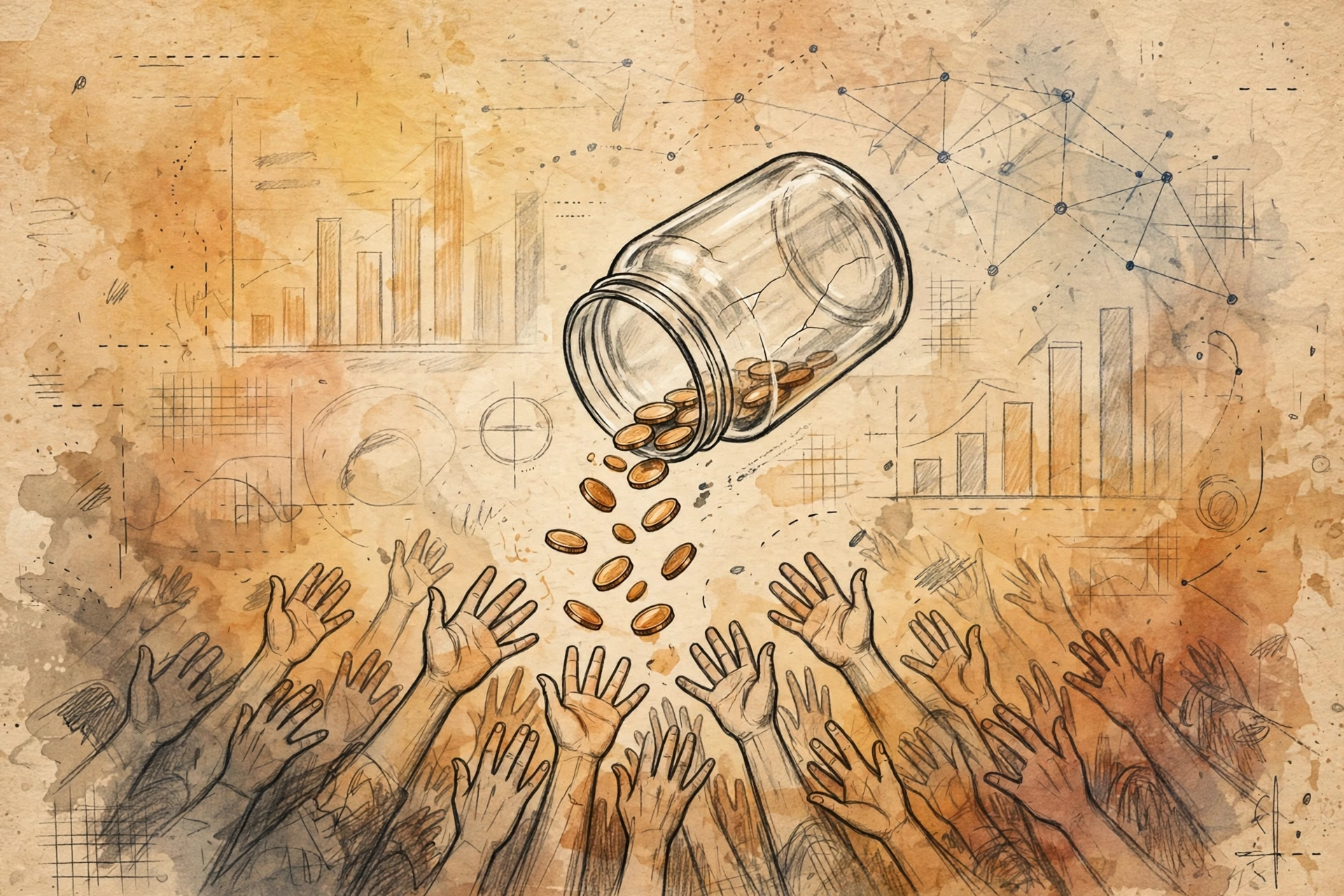
I have written enough grant applications to know the rhythm. Weeks translating a question you care about into the language reviewers want to hear, then months of waiting, then a polite letter that is fatal. Now many scientists in Japan are skipping the polish and talking to the public instead – asking strangers to fund their work. The story of research crowdfunding Japan is not a quirky side project. It is a response to a funding system that keeps asking more and giving less, and it deserves a hard look at what it can and cannot do.
Why grants are failing the people they are supposed to serve
The squeeze has been documented for years. At RIKEN, Japan’s flagship research institute, the budget fell by more than 20% over a decade, and the Brain Science Institute cut principal investigators from 61 to 41. Alzheimer’s researcher Takaomi Saido learned his budget would drop 43% in a single year – not enough warning to pay staff or maintain mouse colonies 250 labs relied on, as Nature reported in 2017.
The complaint has not gone away. Professor Seiji Kumagai of Kyoto University told QS Insights that funding increasingly chases short-term results and has grown more bureaucratic. When a working professor looks for money “outside the university or typical funding bodies,” the system is telling him to improvise.
The FY2026 budget approved a record science increase, the first substantial rise in 15 years, with 6.5 billion yen for young researchers. On paper, things are improving. But universities spent years squeezed by an automatic efficiency coefficient that only just got abolished, and record budgets take time to reach the benches. Researchers crowdfund in the meantime.
Research crowdfunding Japan: what the record actually shows
The milestones are real, not hype.
In March 2012, Shinya Yamanaka – before the Nobel Prize – ran the Kyoto marathon as a charity runner on the platform JapanGiving and raised 10 million yen for the iPS cell centre CiRA. That moment gave the whole idea public legitimacy.
In 2014, taxonomist Masanori Okanishi, then a postdoc at Kyoto University, raised 634,500 yen on academist – Japan’s first research crowdfunding platform – for a micro X-ray study of a fleshy brittle star. Taxonomy is the classic unfundable discipline: no disease, no product, no headline. His became the first crowdfunded paper in the country, published openly in ZooKeys. In 2016, Yousuke Kaifu of the National Museum of Nature and Science raised 20 million yen on Readyfor to recreate an ancient boat journey testing whether Japan’s first inhabitants came from Taiwan. By late 2017, 54 research projects had been funded on academist alone, 200,000 to 3.5 million yen each – “keep the project alive” sums for sequencing runs, fieldwork, equipment time.
What crowdfunding can do – and what it cannot
The public is willing. Aminaka and Yoshioka-Kobayashi surveyed 3,443 Japanese citizens and found 44.8% would support academic research through crowdfunding, averaging 11,316 yen in willingness. The strongest drivers were empathy with the research and a sense that it contributed to global knowledge. People fund what they feel. A cancer early-detection project raises money. A ceramics heat-storage project does not. That is the whole debate in one finding.
It opens doors that grants keep shut. Okanishi’s brittle star is the perfect case: basic taxonomy with zero commercial value, the kind of work the reproducibility crisis keeps mourning. Grant peer review is conservative – reviewers reward what already succeeded. The public can fund the unfashionable. It also forces scientists to explain their work to non-specialists, a skill our community says we lack – the same accountability the NIH now demands of funded discoveries.
But it has no peer review, and most of its users do not want any. In a survey of Japanese science crowdfunding researchers, 90% said peer review was unnecessary – it would hurt originality, they argued. But funding science without quality checks is a reproducibility risk. Grants are slow because they try to catch nonsense before the money moves. The rule changes reshaping clinical research this year (see my post) are partly about protecting science from its own incentive failures. Crowdfunding needs the same scrutiny, not a free pass.
And it bakes in inequality. The researcher with a camera-ready story, a following, and a photogenic disease area wins. The quiet taxonomist, the methodologist, the person whose work is brilliant but boring loses. Crowdfunding is a popularity contest, and popularity correlates with wealth and media skill. It is also a stopgap: nobody crowdfunds a five-year longitudinal cohort. Serious research needs patient, predictable money. Only states provide that at scale.
Frequently asked questions
Why are Japanese researchers turning to crowdfunding?
Grants grew harder to win: squeezed budgets, fierce competition, reviewers favoring safe short-term results. Platforms like academist and Readyfor give basic or unconventional work a route to survival.
Can crowdfunding replace public research funding?
No. It can rescue individual projects and unpopular disciplines, but not provide the stable, peer-reviewed, large-scale funding research programs need. A complement, never a substitute.
My honest take
I admire the resourcefulness. When a taxonomist raises money from strangers to image a brittle star, or a laureate runs a marathon for his lab, that is scientists refusing to let the work die. But a country where researchers must crowdfund is admitting its funding system failed them. The FY2026 record increase is real and welcome – I hope it reaches the people holding the collection tins. Until it does, the crowd is keeping the lights on. Be grateful, but never pretend the crowd was the plan.